
A day in the life
Spenser Therry is the founder of cloud-based business intelligence programme Buyable, which helps independent retailers to make smarter buying decisions. We caught up with her to discuss start-up life and how she’s helping stores to amplify and manage their sales and profits for sustainable growth.
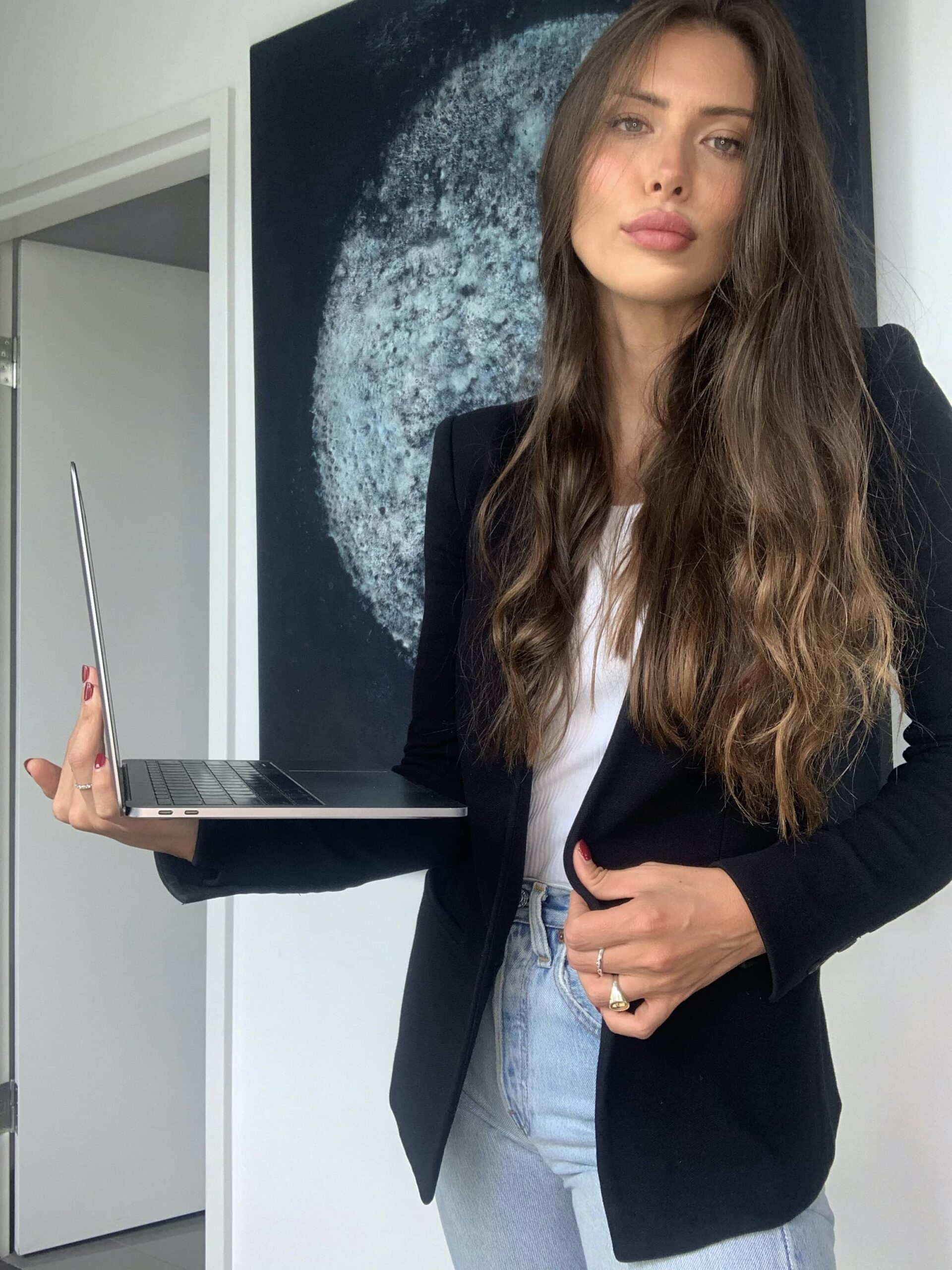
EH: Tell us who you are…
ST: I’m Spenser, the founder of Buyable, and I work in that magical space where fashion meets tech.
EH: Can you explain how BUYABLE works?
ST: Buyable is a cloud-based software platform that makes wholesale buying easier for independent retailers. It automates manual buying processes such as keeping track of purchase orders, calculating buying figures, comparing budgets and monitoring forward order inventory in just a few clicks. Not only does this help to save time in such a fast-paced industry, it helps enhance [retailers’] buying power by giving them the clarity to easily identify product gaps and opportunities in their buy. It prevents over and under buying, forecasts future cashflow, minimises human errors and often alleviates a lot of the stress and guesswork that comes from buying multiple labels when you’re juggling it all by yourself.
Buyable makes it easier for retailers to make smarter buying decisions, so they can build their retail business.
EH: How did the idea for BUYABLE come about and how did you know you were the right person to bring it into the market?
ST: When Buyers started tearing up in the showroom, that was when I knew something had to change. I needed to make a change. After over a decade in the fashion and wholesale industry, with sales campaigns in London, Paris and Milan under my belt, it was here in Australia where the idea for Buyable came about. I was managing 15 designer labels and working with hundreds of independent retailers when I realised that the stresses and pressures of running your own boutique were not getting any easier. In fact, they were getting harder. Trade was hard [as was] managing staff, the fast-paced pressures of social media, selling through product and buying right.
With so much going on, no-one had any time. Opportunities were left, orders were missing production deadlines and buying was often lacking in strategic thought. It was more a case of ‘I’ve just got to do it quickly on the phone with you because I’m in the car and I’ve got to pick my kids up.’ Or ‘just send me the best sellers list and I’ll just pick from that.’ I remember thinking, this is not a recipe for success. Naturally, this would often lead to poor sell-through, lower sales as a whole, stores making less money and buyers becoming more stressed under pressure. There was no easy way to stay on top of it all, just whatever way they could manage with the little time they had.
Buyable isn’t just a tech company; It’s an extension of the retail industry. But more importantly, it’s a system to support small boutique businesses. So, with the knowledge I had gained working closely with brands and boutiques from all over the world, I created Buyable to simplify their life (and give them time back) in the ways I knew would make a difference. While helping to amplify their sell through and profits.
If there is one thing I’ve learnt during my time in the industry, it’s that retail success begins with buying. And now, it begins with Buyable.
EH: How are you funding the business, profiting and monetising your business model?
ST: Buyable is a bootstrapped, subscription-based business that I often refer to as my house, as that’s what I was going to use my savings for before investing everything I had into building it. Since conception, 90% of profits have been put back into the business, into adding value for my customers, creating powerful new features and optimising user workflow.
EH: Are you selective about the independent stores you choose to work with?
ST: I would say stores that buy mainly indent brands (e.g. brands that sell in seasons as opposed to quick to market, aka fast fashion brands) have found the most value in Buyable. As they are often dealing with inventory being purchased anywhere between three to 12 months in advance and therefore, the need to monitor styles and spending on each collection is greater for these stores.
EH: Can you run me through a typical day in your shoes?
ST: 6.30am: Wake up and check emails (reply, flag to action later, file or delete – I have email files for everything).
7am: Wander into the kitchen where my partner James has probably been up for at least two hours by now and always has a coffee ready for me. We’ll chat while I sit at the kitchen bench and post on social media.
7.30am: Light some incense, put on some classical music and journal or read for 30 minutes. I listen to classical music at 60 bpm as it activates the left and right side of the brain simultaneously, maximising learning and retention of information.
8am: Head to the garden for gratitude’s, grounding and coffee number two in the sun with James.
8.30am: Plan my tasks for the day, put them into priority order, then jump in the shower and get myself ready for the day.
9.30am: Hop onto our back-end systems and check for potential issues (i.e missed payments, incomplete sign-ups, subscriptions about to expire, usage of features), wake up the online chat and take whatever actions are needed.
10.30am: Check in with new customers and assist with any onboarding support they need. Reply to any important flagged emails from earlier [in the day], customer queries and DMs.
11am: Demo catchup with potential new customers – [via a] phone call or store visit, depending on their location and what they prefer.
12.30pm: Lunch [involves] listening to a podcast, usually outdoors so I can have some time away from the screen.
1.30pm: Jump onto Mailchimp and create this week’s mailer.
2.30pm: Skype call with my developer
3.30pm: Continue testing functionality and designing the layout for the new features currently in development.
5pm: Continue developing new graphics, icons & imagery (for front and back-end sites, as well as for socials).
6pm: Reformer Pilates! Being in front of a computer all day means that by this time, I am dying to get my body moving properly.
7pm: Check emails once more, wrap up any loose ends, list important tasks that need to be completed tomorrow.
7.30pm: Pour a glass of wine and cook dinner with James. It’s time to be present and relax.
EH: How’s start-up life living and working in Australia?
ST: It’s pretty amazing, I am so incredibly grateful to be where I am. It just feels like there is space here for new things, new opportunity and for each person to make their mark. It’s exciting!
EH: How do you manage the time you spend on social media for BUYABLE?
ST: Social media is such a powerful tool for so many businesses but not so much in the inventory management or the SaaS space. For Buyable, putting too much energy into growing a following on social media would be chasing a vanity metric that doesn’t actually convert for me, or drive my business forward. So, I try to spend as little time as possible there and focus more so on helping my customers and adding value to Buyable.
EH: What’s the number one lesson you’ve learned in business?
ST: One of the most valuable lessons I’ve learnt (and there have been so many) is that it’s not personal, and your business doesn’t determine your self-worth. It’s so important to remember you are you and your business is your business. Life as an entrepreneur can feel like a rollercoaster – the highs are high and the lows are low. Failing to differentiate yourself from your business can mean your emotions will constantly be jumping up and down with the successes and challenges of your business, and this can not only become extremely draining but also unhealthy. Your personal emotions, successes and struggles do not have to, and will not always match that of your business, and that’s probably a good thing. Business isn’t personal.
EH: Who’s been your greatest inspiration?
ST: I would have to say I am most inspired by other SaaS founders. Hearing their struggles, how they overcame certain hurdles, how they pivoted and what they did to get where they are. It never ceases to excite, teach and inspire me [when] hearing the sheer grit and determination these people have. Books like the Lean Startup by Eric Reis and The Mom Test by Rob Fitzpatrick have been great, and I also listen to a podcast called The SaaS Podcast with Omer Khan which is all about SaaS founders, growth hacking and entrepreneurship.
EH: If you weren’t the founder of BUYABLE, what would you be doing?
ST: I can’t imagine doing anything other than what I do now, but if it were anything it would definitely be in fashion wholesale. I loved working so closely with buyers and designers and being a part of both worlds.
EH: What are you doing when not working on BUYABLE?
ST: You’ll probably find me on the porch drinking wine with James, like a little elderly couple, talking to the passers-by and pondering about life. If not, I’ll probably be eating and drinking somewhere close by with friends, creating a make-shift office under the trees at Hyde park or at the beach. I also love making digital collage art but haven’t found much time since Buyable.
EH: How do you practice self-care?
ST: Self-care for me is prioritising my energy and keeping a positive mindset. This may come in the form of saying no to weekend plans so I can get ahead (sleep hugely impacts my productivity and I’ve found I need at least 8 hours a night). Doing Pilates helps me to stay present by shifting the focus from operating on such a high frequency in my head, to moving my body in the here and now. I also practise daily gratitude to remind myself that no matter what’s going on with customers, development or anything in my working world, I am still so fortunate to have the life I do. Sometimes it’s even as simple as being grateful that I have food to eat, a roof over my head and friends and family I care about.