
A day in the life
Sustainably made wedding dresses may be hard to come by, but that's a problem experienced bridal designer Sabina Motasem has solved. Last year, she launched her ready-to-wear range, The Green Collection, made with the same level of craftsmanship and attention to detail as her couture designs.
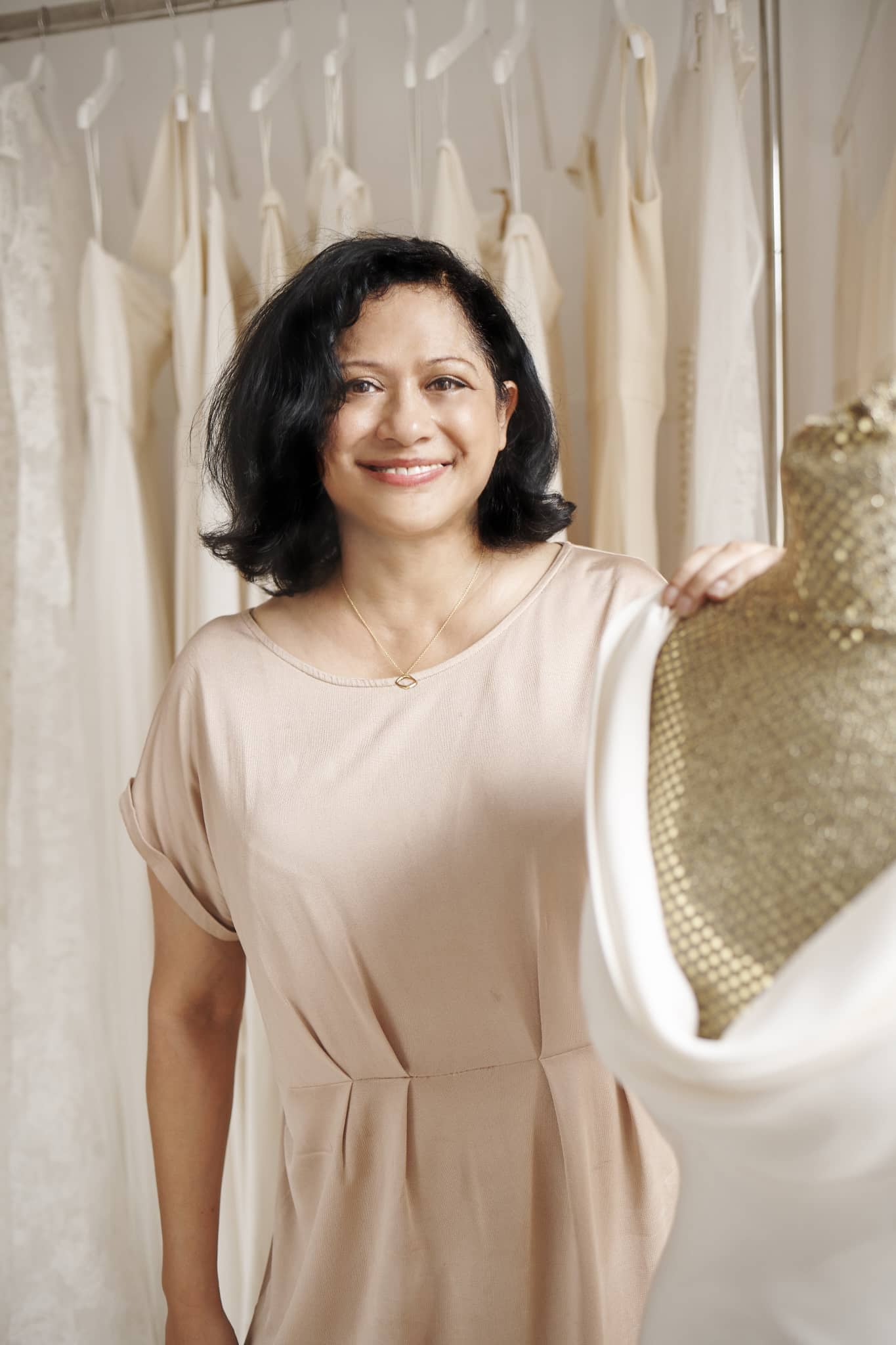
Dresses are individually crafted in her North London atelier, using natural, plant-based materials, and they epitomise understated elegance – which is perfect for the modern bride.
ED: Tell us how you started your bridal wear business…
SM: After graduating from De Montfort University, I started my own fashion label, designing gorgeous day dresses and cocktail dresses, which we showed off-schedule at London Fashion Week. Then, about fifteen years ago, after some of my friends complained they couldn’t find a simple, elegant wedding dress (the market was oversaturated with traditional frilly dresses), I started designing and gifting them [to friends]. After my fifth gift, I realised there was a gap in the market. So, what started as a hobby soon became my business.
ED: How did The Green Collection come about?
SM: Launching the Green Collection was something that we had wanted to do ever since Brexit was announced. We created it for people who we thought might not have the money to spend on a couture wedding dress. It took us a couple of years to find the right fabrics, but then lockdown hit and we couldn’t launch the collection. [However,] we used that time to fast-track everything. We [debuted] the collection during the first lockdown in 2020.
EH: How did you go about sourcing the fabric?
It was hard. We looked on Google, we looked through different fabric agents and then we sourced through trade shows like Première Vision, which happens biannually in Paris. They have some of the best fabric suppliers in the world. Luckily, we were able to do it all remotely. Hundreds of fabric swatches later, we finally found the needle in the haystack: the fabric that looks like our usual silk and drapes exactly the same. And we thought ‘great!’.
EH: How do you come up with your designs?
SM: It’s always a mix. For my bridal wear collection, I’ve always found my brides to be very inspirational. They’re strong, independent women. I always look at really old Hollywood because it’s so glamorous and classy, without any sort of fuss. You can’t beat a really good fit and nice, simple lines. Sometimes something simple and elegant is always the best look for someone, rather than complicating it with too much pattern or too many designs. I like futuristic architecture as well. I’ve always been inspired by geometric lines and nature, so it’s a bit of a melting pot of lots of different eclectic things.
EH: How would you describe your target customer?
She’s the kind of girl that probably thought she’d never get married. She’s probably gone to a few music festivals. She probably was a bit of a tomboy growing up, but she’s sassy, she’s strong, confident, independent. She probably doesn’t want to have a massive, princess-like wedding. She probably wants to have a nice, intimate gathering with all her special people instead.
EH: Could you run me through a typical day in your shoes?
SM: In the morning, I’ll be catching up with emails and having meetings with our production coordinators to see what new orders need to go in with our factory in North London. In the afternoon, we’ll be working on new pieces. Part of the day will [involve] scheduling Instagram posts and planning shoots. When I come home, there’s nothing better than a nice home-cooked meal while watching movies with my husband. Otherwise, I’ll be catching up with friends and sitting in a beer garden somewhere – that’s what I’m really looking forward to doing.
EH: How do you practice self-care?
SM: Going for a run really helps me to alter my consciousness and forget about what I was doing during the day. I think that’s really important for creativity and anyone who is running their own business; they have got to do a lot of self-care. I’ve also started listening to podcasts while [walking] around the local parks.
EH: What kind of podcasts do you listen to?
SM: I’ve been listening to The Kindness Economy by Mary Portas. She talks to lots of really innovative visionaries, people who are changing the world. It’s highly recommended.
EH: What have you learned from listening to The Kindness Economy?
SM: I’m committed to making sure that my business makes a change to our world. So, listening to these podcasts is a really good way of hearing about how other successful people have done it. I find it really inspirational.
EH: What’s the number one lesson you’ve learnt from your time as a business owner?
Learn how to read a balance sheet and income sheet. And if you don’t know how to read those things then learn how to do it. If you’re a creative person, take time to go on a business course and learn what all those numbers mean because if you don’t understand, if you don’t take care of your little pennies, then you’re not going to be able to manage your cash flow. At the end of the day, especially in a downturn, cash flow is everything.
You have to know how you’re going to live. If you don’t have a huge amount of money in the beginning, it can be really depressing. In the early days, I had a part-time job as a graphic designer for fashion PR agencies. I was making contacts, I was making money and learning about the industry; learning how to write a press release, how to build a really good brand. If you don’t have the luxury of having a lot of money to start a business, then get a part-time job in an industry that will give you skills to help.
EH: How important is it to be able to wear different hats as a business owner?
SM: Very. Being creative isn’t enough. Having a really good fashion idea these days isn’t enough. What we’re going to see for the next five years is that the whole landscape for businesses, especially fashion, is going to change. You’ve got to make it more ethical. Consumers are going to expect all brands to have a sustainability footprint of some sort. I think, in the future, that’s going to be as important as other things in a business.
EH: What do you have in store for the future?
SM: We’re going to bring out a new day range later this year. It’s still in the planning stages, but I’m going back to my roots. Before bridal dresses, I used to do gorgeous day dresses and cocktail dresses. But this time, I’ll be using the eco-friendly fabric that we’ve found. We’re trying to evolve for what the future is going to be. People’s priorities are changing, less is more. One of the biggest trends going forward is that people will want to make very considered purchases of things that they need.