Brand to know
We're putting a spotlight on our coveted up-and-coming brands. This week: Azura Lovisa
Azura Lovisa
Azura Lovisa is a London-based slow fashion luxury label with a focus on elegant silhouettes, mindful craftsmanship and “holistic harmony with the earth”. Garments are made in handwoven natural fabrics such as malay silk songket, raw tussar silk and ramie. Azura Lovisa Wännman designs collections that are small, seasonless and gender fluid. Here, she talks us through three key pieces from her latest collection.
The Hati Sling Bag Top
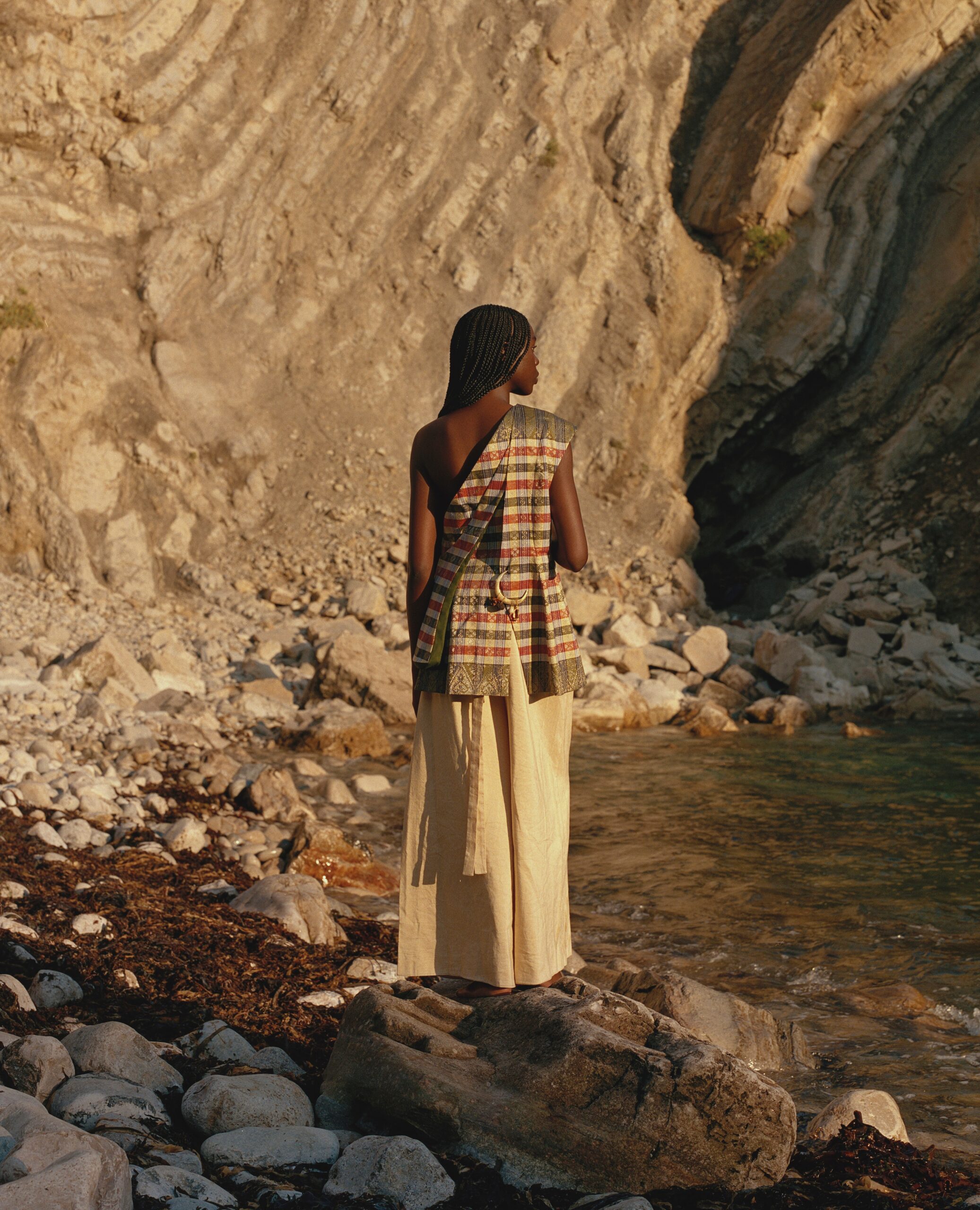
“Hati means ‘heart’ in Malay. This piece is very dear to me as it’s the first garment I made using handwoven Malay silk songket, which is a treasured heritage textile of Malaysia, where my mother is from. It features silver and gold thread brocade in various patterns and motifs inspired by nature.
I’ve collected songket over the past few years, and the fabrics are so precious to me that for a long time I was too afraid of cutting into it. But once the top was sewn together, I was overwhelmed with pride. The silhouette is relaxed and asymmetrical, radiating out and down from the shoulder in overlapping layers, and features a removable matching sling bag which is designed to closely follow the body’s curves. I love the idea of humans as natural gatherers and wanted to create a look where this tendency towards collecting and carrying precious things was honoured and built into the garment.”
The Pahlawan Layered Top
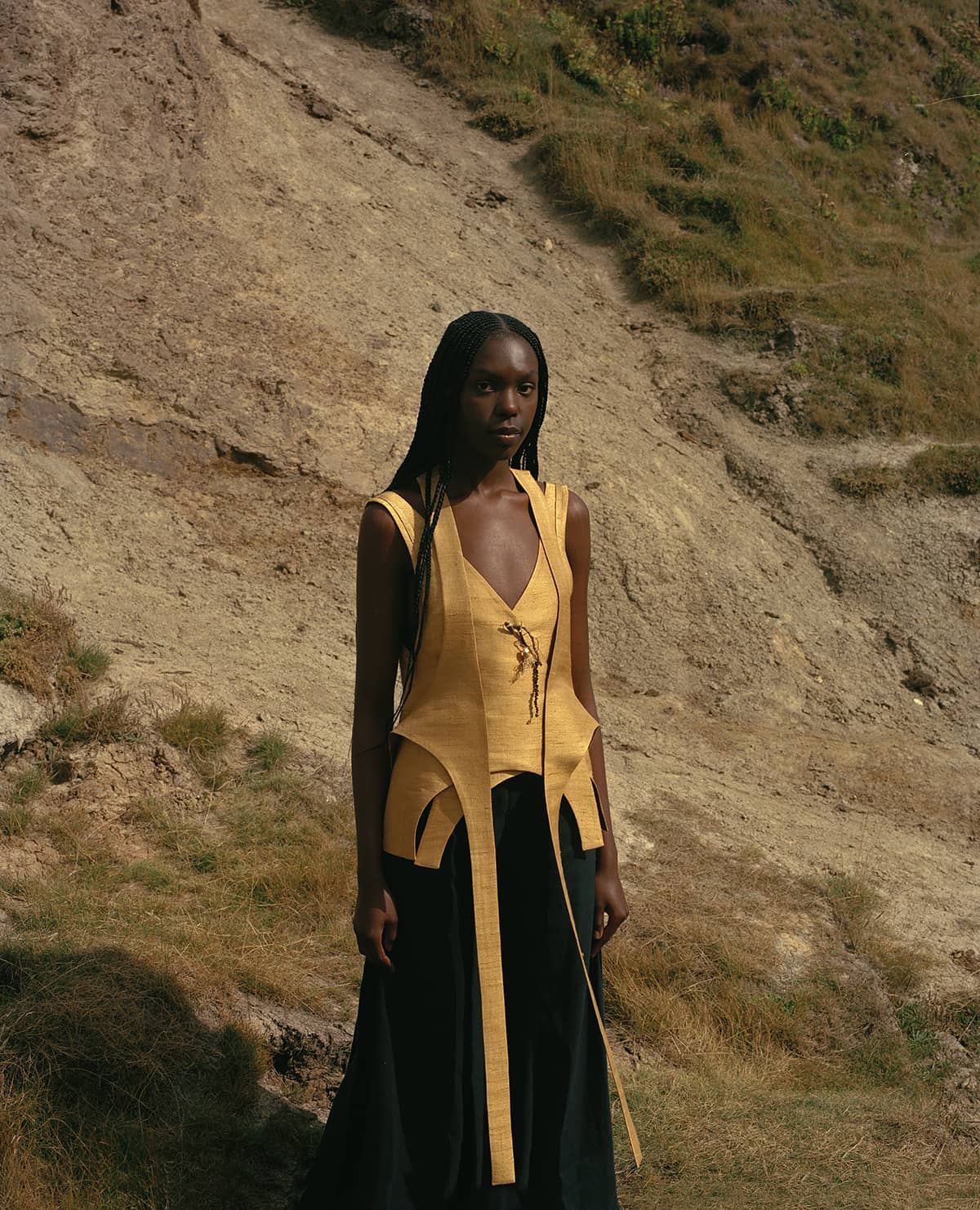
“As I was creating this top, I kept referring to it as the ‘warrior’ top because it felt very assertive and strong and has something of an armour-like look to it. So, I eventually named it Pahlawan which means warrior in Malay. This golden yellow fabric is one of my favourites, and I’ve used it since my graduate collection. It’s a handwoven raw tussar silk from India, [which] allows the silkworm to complete its life cycle and emerge from the cocoon. Usually, silk requires the silkworm to be boiled alive while still in the cocoon, in order to prevent the silk filaments from being broken, but with Tussar silk you get this beautiful rough, nubby texture as a result of the shorter broken filament lengths.
I’ve been moving towards more modular design, where elements of a garment can be taken apart and worn separately or reversed; this is one of those pieces. There are three separate sections that can all be worn on their own. [This top] adds an interesting asymmetric element when layered over a shirt, for example. I also used darker greenish-gold silk on the inside so you can flip it inside out for a different look. And [I’ve] added a thin strap encircling the armholes which allow accessories to be clipped or tied on; I’ve [accessorised it] with some of the charms from our jewellery line.”
The Diraja Interlocking Coat Dress
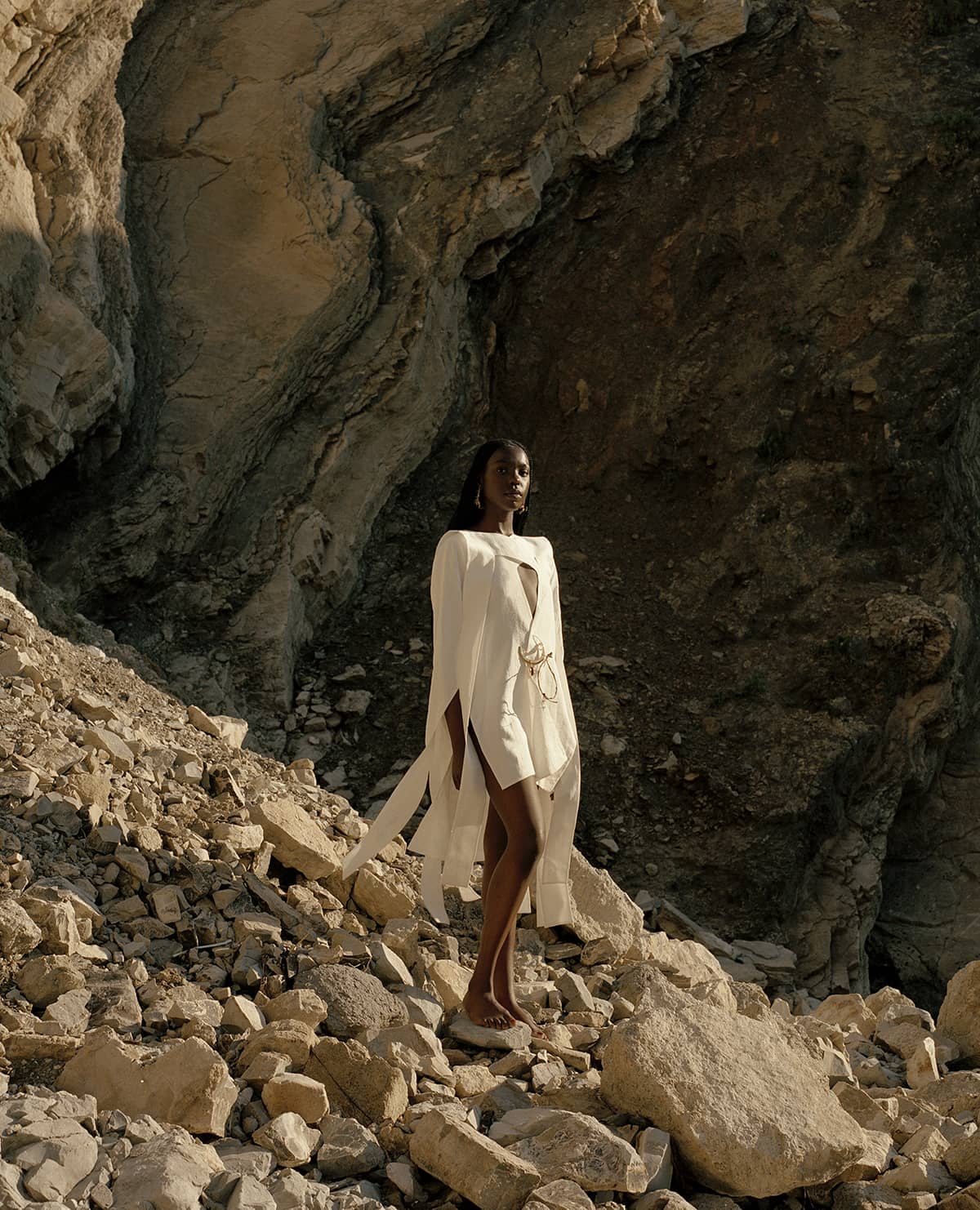
“This design is one of my signature looks, and I’ve featured it in a blue wool in an earlier collection. For this collection, we made it out of ramie, a highly sustainable eco-friendly natural bast fibre traditionally grown in Asia for thousands of years, and one of the oldest fibre crops in the world. We achieved this beautiful airy lightness with the ramie, which gives it an ethereal look, but it’s still very wearable. The design features two symmetrical halves that cross over each other at the front and interlock, while both long ends hang over the shoulder keeping it all in place. There’s also a space in the centre of the chest to reveal a little hint of skin. When people wear this they have told me it feels very regal, like you’re the protagonist in a fantasy epic – hence the Malay name Diraja, meaning ‘royal’. The sleeves feature these long banners of fabric that add a flourish to your every move, and the whole garment moves beautifully in the wind. It can be worn as a coat or as a dress.”