A curious mind: Research engineer, Ira Ktena
Ira Ktena is a self-described “lifelong learner” and we can’t deny her intuitive mind. One that’s led her to Harvard Medical School, Twitter and her current position at DeepMind – a company using artificial intelligence to solve real-world problems while developing our scientific awareness.
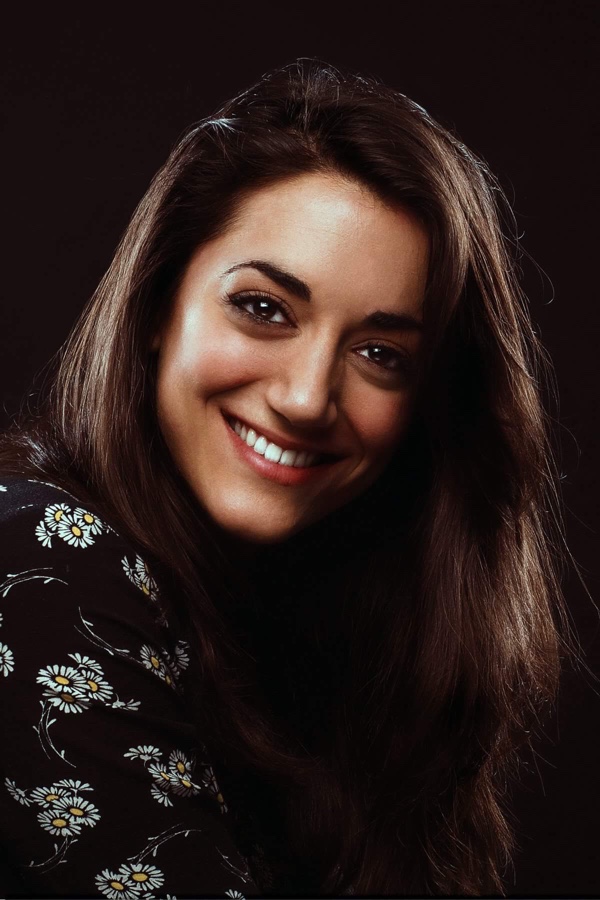
We met over Zoom to discuss her career journey, developing effective teams and leveraging technology as a start-up business.
E: Sum up your personal brand profile…
I: I’m an engineer and researcher, with curiosity to explore the intersection of computer science and engineering, as well as different fields [such as] biomedical sciences, sociology and political science. I like learning from these other domains and trying to transfer some of the skills that I’ve learned to new areas. I’m a lifelong learner. I understood quite early that the more you study, the more you get to understand how limited your knowledge actually is. So, I continue to learn.
E: Tell me about your background and when you first realised you wanted to venture into this industry…
I: It was not well planned. I started my education back in Greece, where I did my undergraduate degree in engineering, but I was considering different routes after that. Healthcare was one of the things that really interested me, and applications in bioinformatics and biomedical imaging. So, I explored that a little and then when I moved to the UK for my master’s in biomedical engineering (at Imperial College London), I was exposed to neuroscience for the first time. I was very intrigued by understanding how our brain works with computational methods.
One thing led to the next and I started my PhD in connectomics, which is essentially modelling the brain and its structural and functional connections as a network. And trying to identify pathways of different neurodevelopmental disorders, and how they can be disrupted.
Then the artificial intelligence world started booming, so I became interested in being exposed to different sorts of applications. One of the things that really kept me interested in this area is having the potential to make a lot of real-world impact in healthcare and solving real problems at scale.
E: How much of an impact did your upbringing have on your career choices?
I: My mother studied economics and my father is a biologist and high school teacher; he’s a very curious person. And even though he might be teaching the same material every year, he finds a way to see [things] differently and to explain it in a different way so that students will engage. That probably made me [focus on] staying curious and learning things.
“I understood quite early that the more you study, the more you get to understand how limited your knowledge actually is. So, I continue to learn”
E: Is there anyone in particular that helped you along your career journey?
I: It’s actually someone that I didn’t interact with for too long, but I found her influential. Her words and advice stayed with me until now, and I think they will continue to. It was my mentor, Natalia Rose, when I did a research internship in Boston at Harvard Medical School. She’s a neurologist there and a professor at Harvard. She was so knowledgeable and so humble at the same time, but she knew how to demonstrate her leadership in a non-aggressive way. She was very respected and she really cared about her mentees, whether they were the doctors that she was training or the research trainees like myself.
I was at the end of my PhD and I was thinking what to do next: ‘Should I stay in academia? Should I go into industry?’ But she told me, ‘You don’t necessarily need to find an existing path that fits you; you can carve out your own path’. And it might sound very simple, but in that moment, something switched in my mind. I realised that I was trying to find a match somewhere: ‘Could I do what they do?’ That comment made me think that actually, there might be moments in your career or personal life where you feel there’s no example of what you want to do – and that’s fine. You can be the first one to do it. So, I found this experience very transformative. She’s a person I really look up to; I feel very lucky that I met her.
E: Tell me about the company you work for, DeepMind?
I: The company is trying to solve intelligence and then use it to solve everything else. For example, recently, there’s been work on protein folding, which some say is of equal importance as the double helix of the DNA and figuring out the structure there. So, it’s about artificial intelligence having an impact in fundamental sciences, but also emulating every aspect of the human brain.
E: How can startup businesses leverage technology and machine learning to grow their audience?
I: I think one issue with this field is that many people want to say they’re using machine learning, in some way, on their website. And I think step one is to understand if it is required as part of your business. And the truth is that many problems can also be solved without it.
Using social media, marketing or UX research can be far more valuable than trying to dive into a very specialised algorithmic technology, just for the sake of it. It’s often observed in companies that are trying to use machine learning that they don’t necessarily have the right data to answer customer’s questions. So, it’s very important to understand what insights you’re trying to get for your business. Once you answer that, what data do you need to get these insights? And then you can move on to figuring out, ‘Do I need machine learning?’ If not, go back to what other technologies you might need. But if the answer is yes, then make sure you have access to the data that you would need to answer fundamental questions.
“There might be moments in your career or personal life where you feel there’s no example of what you want to do – and that’s fine. You can be the first one to do it”
But I think the most important step is actually identifying the questions and potentially the hypotheses that you would like to test and get the data [for]. The last bit would be the machine learning part.
E: What questions should businesses be asking to identify whether machine learning technology is right for them?
I: If it’s an existing company, what are the limitations of not using technology? Is it about recommending new items to users or is it about pushing a new brand? And then you want to identify which users or which audience to target for a particular brand. So, it’s really about digging into the actual thing that you want to do. When you find the bottleneck and identify the limitations, then you can ask, ‘Would this technology actually help me get through this bottleneck?’
E: How is technology impacting the way organisations develop their teams?
I: In the early days, there was a mismatch between demand and supply of talent because companies didn’t know where to start. Now, I think there’s been an equilibrium; there’s a lot more talent. But I think organisations have come to realise how important it is to have diversity on the team, because these technologies that are being developed impact everyone in one way or another. And in order to build technologies and products that will have the same impact in different places, they need to have representatives of this population on the team. I’m pleased to see this transition in leadership and in [finding] talent.
I think it’s great to talk about diversity, not only in terms of background. It’s not only people with computer science degrees that go into this field, but even people from arts, sociology, physics. There’s a wide range of skill sets that are contributing to the field. And at the same time, it’s the diversity in lived experiences, it’s the diversity in socio-economic backgrounds. All these things are very important to have as part of a team, in order to have different voices being heard.
E: On the subject of diversity, have you experienced discrimination as a woman in this field?
I: I did experience a bit of sexism [during] my PhD, because I was the only female in the group. In my programme, there were some people with very strong allies, and other people that were really biased, and it was hard for them to let go. But I think education and academia is moving in a direction that sees the benefit of having female leaders and females of colour. Intersectionality is picking up to increase diversity and ensure that you represent everyone.
“I remember the site lead for Twitter; she had blue hair and would wear T-shirts. And every day, she would come in with her own identity; she didn’t have to change who she is”
E: How was the work culture at Twitter while you were there?
I: I think it was one of the most diverse environments I’ve been in. And I saw that recently, they’ve started a new branch in Africa. So, I think they’re really trying to tap into this new market and realise the value of having diverse talent on the team.
E: How have you fought for inclusivity in relation to developing a team?
I: When we were hiring, I could see that someone had a lot of potential, but they just didn’t have as many opportunities as other people. I would really try to stress the importance of getting someone like that onto the team and at the same time, try to train them through courses. For example, when I was at Twitter, we developed a data science course that we delivered for free to female communities that wanted to get into data science. So, I think helping through education is one of the most important ways to try and push for change there.
E: How much does self-presentation matter in your industry?
I: My (traditional) mum keeps telling me, ‘You need to take care of your skin because people notice these things’. I’m like, ‘I spent 10 years studying for four degrees. Do you think it matters?’ It always matters a little bit, but it doesn’t matter that much when, let’s say, interviewing others – I haven’t seen it. One good thing about this industry is that people can have their own identity in terms of how they present themselves. It’s not like you need to be smart-casual every day. I remember the site lead for Twitter; she had blue hair and wore T-shirts. And every day, she would come in with her own identity; she didn’t have to change who she is. So, I think that’s quite a nice thing about this industry, that you can bring your true self in terms of styling and how you get dressed.
E: How would you describe your own personal style for work?
I: I’m more of a minimalist. I like Scandinavian style and playing with colours and geometric shapes. But at the same time, I like to be comfortable.
E: Have you thought about where you’ll be in five years?
I: I never managed to plan five years ahead, to be honest. During my PhD, I kind of had to because it was a three to four-year commitment. But I think at every step, I kind of figure out the next step, so it’s a bit hard to tell. What I’m really hoping to explore is the best way to use my skill set to have some positive impact in the real world. At the moment, I’m building my career capital through the people I meet and learning a lot from them. I’m also being exposed to new challenges; I think that will help me have more influence and more impact in the future.