"There’s no point in making a very sustainable dress that you wear once"
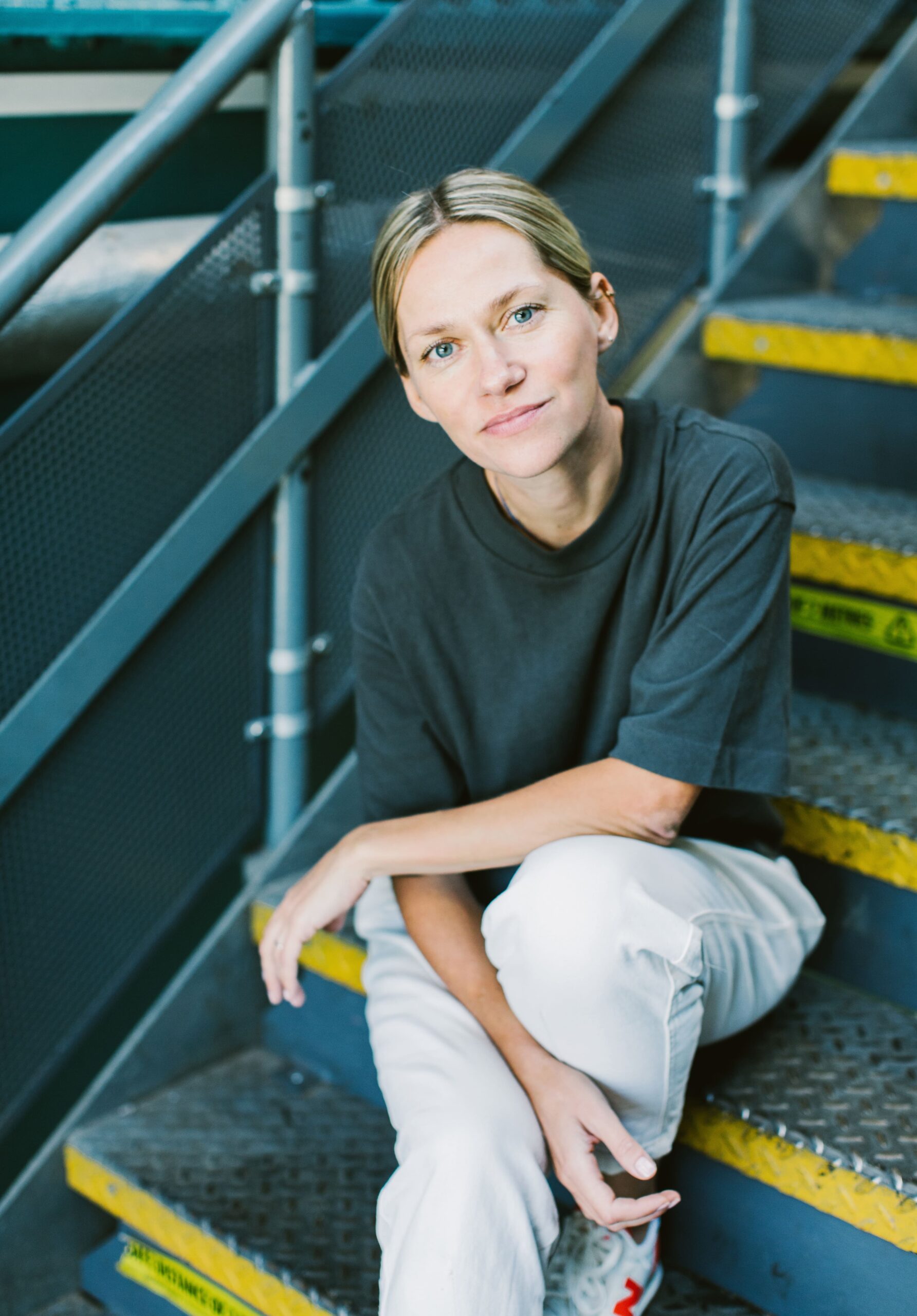
Genia Mineeva is the founder of BEEN London, an all-female brand turning certified recycled materials into handmade luxury bags.
EH: Tell us a bit about yourself and why you started BEEN.
GM: BEEN is a company that turns what others consider waste into everyday beautiful products. It is a mission-first company (we are a social enterprise) and it was born out of thinking, ‘Can I do anything to divert waste from going to landfill? Can I do something that would make people think differently about what would normally be considered waste. Can we see it as a beautiful resource, something we can rescue and turn into a new product?’
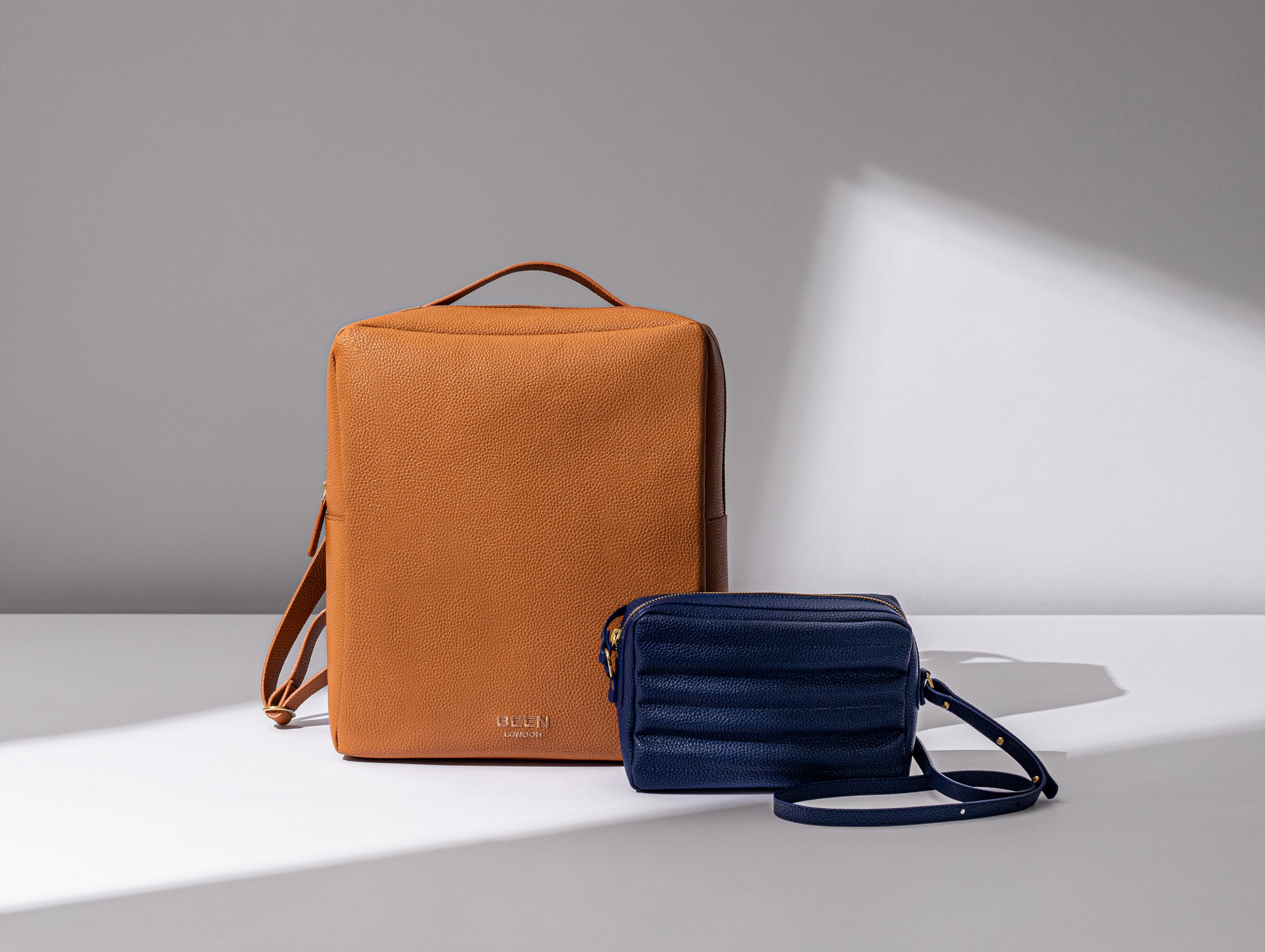
As a former journalist, I really like diving into those stories behind materials. Take one of our backpacks, [for example] – the lining is made from what used to be discarded clothing. It’s then properly cleaned, processed, shredded and woven into new thread and then rewoven into this super beautiful premium recycled cotton that is certified and made in Italy. The zip has a story [behind it] as well – the tape was [repurposed from] plastic bottles. Instead of going to landfill, they’re collected, processed, washed and turned into a thread, then turned into a zip tape.
The challenge was for me to create a product that people would love to wear every day, something that doesn’t just get worn once. There’s no point in making a very sustainable dress that you wear once. I thought, ‘How can we make products that people can enjoy every day, that are going to look amazing, be very functional, actually divert waste from landfill and empower men and women who wear them? [So they] feel like they’re part of the solution rather than part of the problem?’
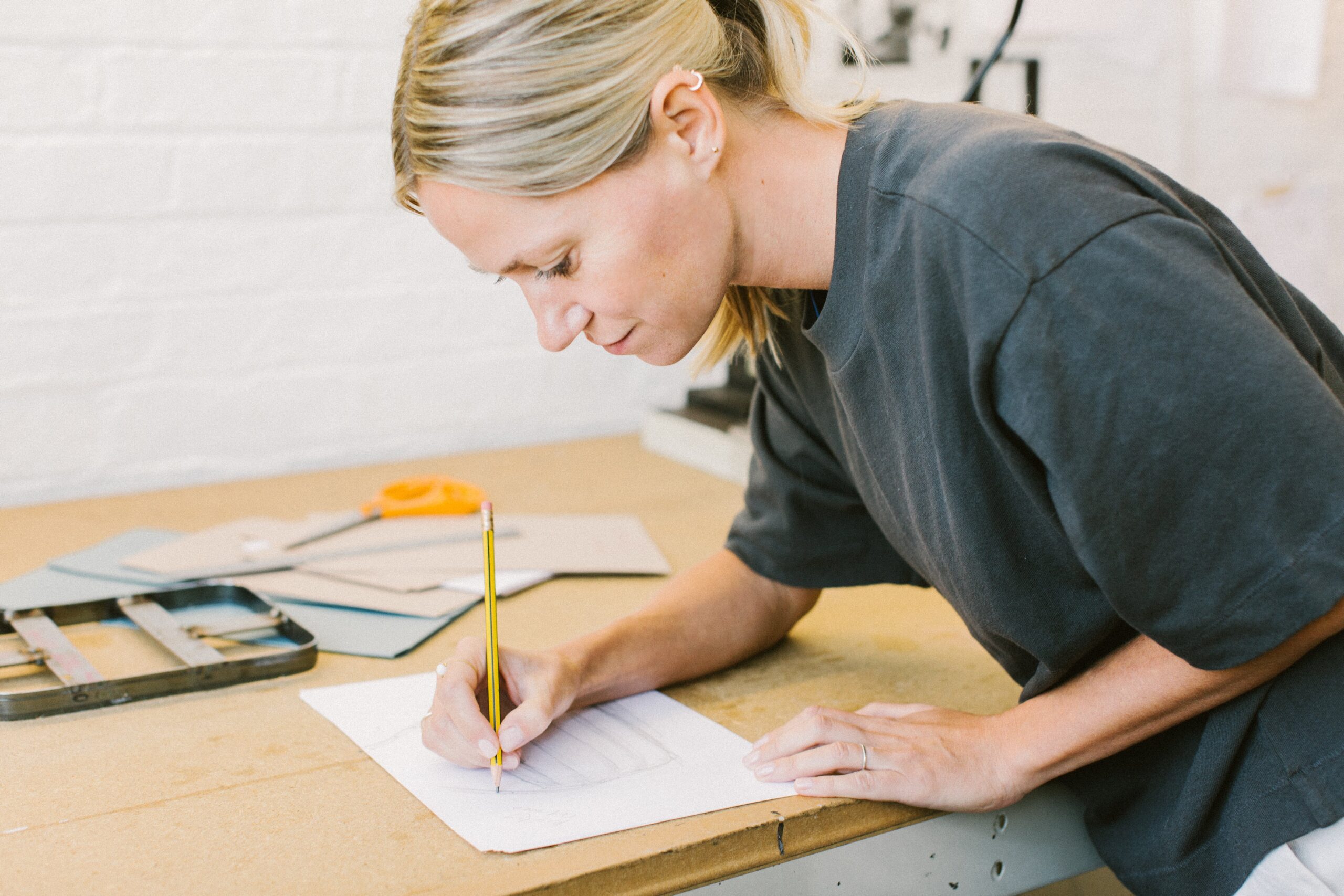
Pictured: Sketching designs in the brand’s London studio
EH: What sparked your career change from journalist to brand owner?
GM: I watched a lot of films about waste and felt shocked by the amount of waste we’re all creating. The tiny percentage of what we throw away being recycled is a massive issue. For me, not doing anything about it wasn’t an option. So I thought, ‘How can I get a lot of people to contribute to the solution?’ Making a product that helps everyone to be part of the solution felt like a very natural thing to do, even though I had no experience in making or designing any products.
The second thing was that I was volunteering in Calais at a refugee camp with my friend Jenny. We were put on the clothing donations sorting line. A big pile of it was not usable because it was in such a bad condition and I just started wondering, ‘What happens to those clothes?’ That led me onto this journey of finding the most incredible people around the world who turn trash into treasure. I see our job as making a product that would help every woman and every man be part of that journey.
I also went back to university at the age of 37 to learn about sustainability and to really understand how you measure things. It is so easy just through ignorance to do more harm, that I felt that I absolutely had be educated in this area.
“The learning curve never stops and it’s always steep”
EH: Can you run us through a typical day in your shoes?
GM: 8am: My day starts with me getting my kids ready and having a coffee with my husband.
9am: I get the kids out of the door and cycle across Victoria Park to my studio.
9.30am: I go through a bit of planning and think about what is happening throughout the day and rest of the week.
10am: We have our daily quick catch-up as a team. Usually, it doesn’t take more than ten minutes. It’s just a way to go over stuff that’s happening during the day. Plus, it’s a way to check in and ask how everyone is feeling. Sometimes there are days when you know someone is not feeling well or just not feeling on top of their game. So, as a team, we jump in and try to support that person – it’s a very warm and inclusive environment.
10.30am: I might have a call scheduled with someone who is making some crazy new materials made from waste. Last Thursday, for instance, I had a call with the founder of a company who is turning discarded oyster shells into pearls. Or I might have a call with another founder of another brand that we’re doing a collaboration with. Looking at my diary, I’ve got a call with the London College of Fashion later in the week (we work very closely with their fashion students). On the same day, I have a BBC Sounds podcast recording and a call with our website developers.I would also often pop into our workshop in Stratford where the bags are made, discuss any new designs we’re prototyping, have a look at anything in production and have a coffee with the makers.
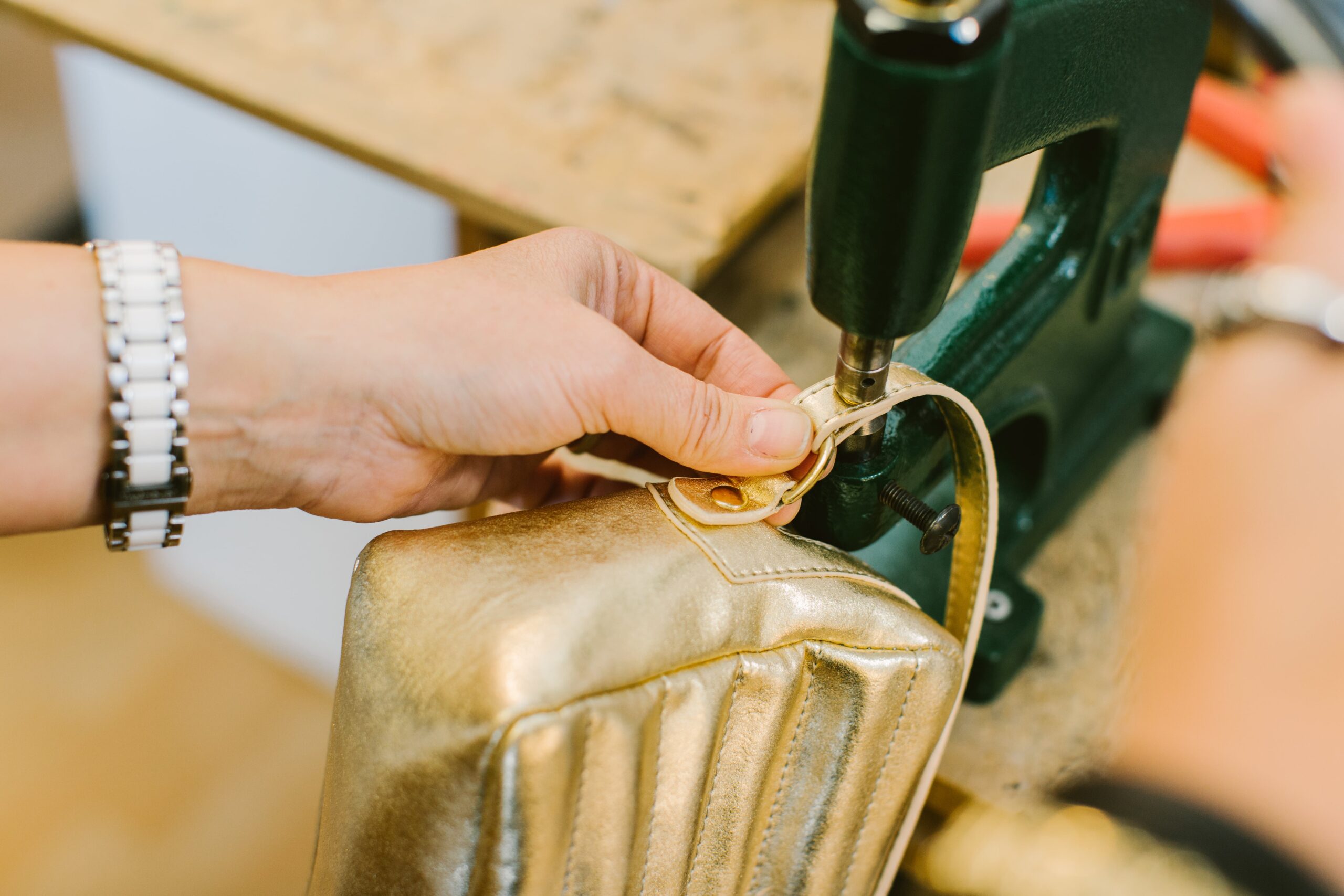
Pictured: Adding finishing touches to the Ridley crossbody bag
5-6pm: I usually cycle back home between five and six, cook dinner (very often for many more people than my immediate family. We have friends or neighbours over for dinner a few times a week, or I go on a date night with my husband.
I try not to check my emails in the evening; I go for a bath and read a book instead or watch a movie on the couch with a glass of wine. I’m usually in bed by midnight!
I have busy days, but they’re also incredibly interesting. I pinch myself every day – the types of people I speak to are fascinating. The person I spoke to before this call turns electronic waste into amazing speakers. It’s all about exploring how we can collaborate and work together. There’s always a little bit of learning every day. I try to do a couple of webinars a week to learn about various things, from e-commerce and VAT rules to regenerative farming and B Corporation.
“I made a mistake of starting a business in an industry I didn’t have any experience in…having to restart my career for the third time.”
Pictured: The Islington backpack and Ridley crossbody bag
EH: Your bags are both functional and beautiful. Can you talk us through the design process? Where do you get your inspiration from?
GM: When we think of a new collection, we always ask our customers and our community what they need, (‘Is there a product you want us to make?’) With the backpack, for example, we designed two different shapes and couldn’t decide which one to go with, so we just put them on Instagram and asked, ‘Which one do you like?’ In terms of colours, it’s always nature-inspired. All of our colours are named after things that they were inspired by. We have ‘Desert’, ‘Tan’ and ‘Red Coral’, which allows us to start conversations about the really cool stuff that’s happening with reversing coral bleaching. [These are] little things that help us talk about environmental issues but from the positive solutions-oriented point of view.
EH: Which of your designs have been the most popular so far?
GM: I think crossbody [bags] are always very popular because they’re such easy bags to wear. The Ridley crossbody is our bestseller. In the new collection, just launched, the Cecilia crossbody has been doing very well. Our large (functional) bags are designed to fit everything. We design for the people around us – some of them are mothers, most of them work and they juggle multiple responsibilities. There’s always a laptop, a pair of trainers or kids’ stuff, so we make sure it’s functional.
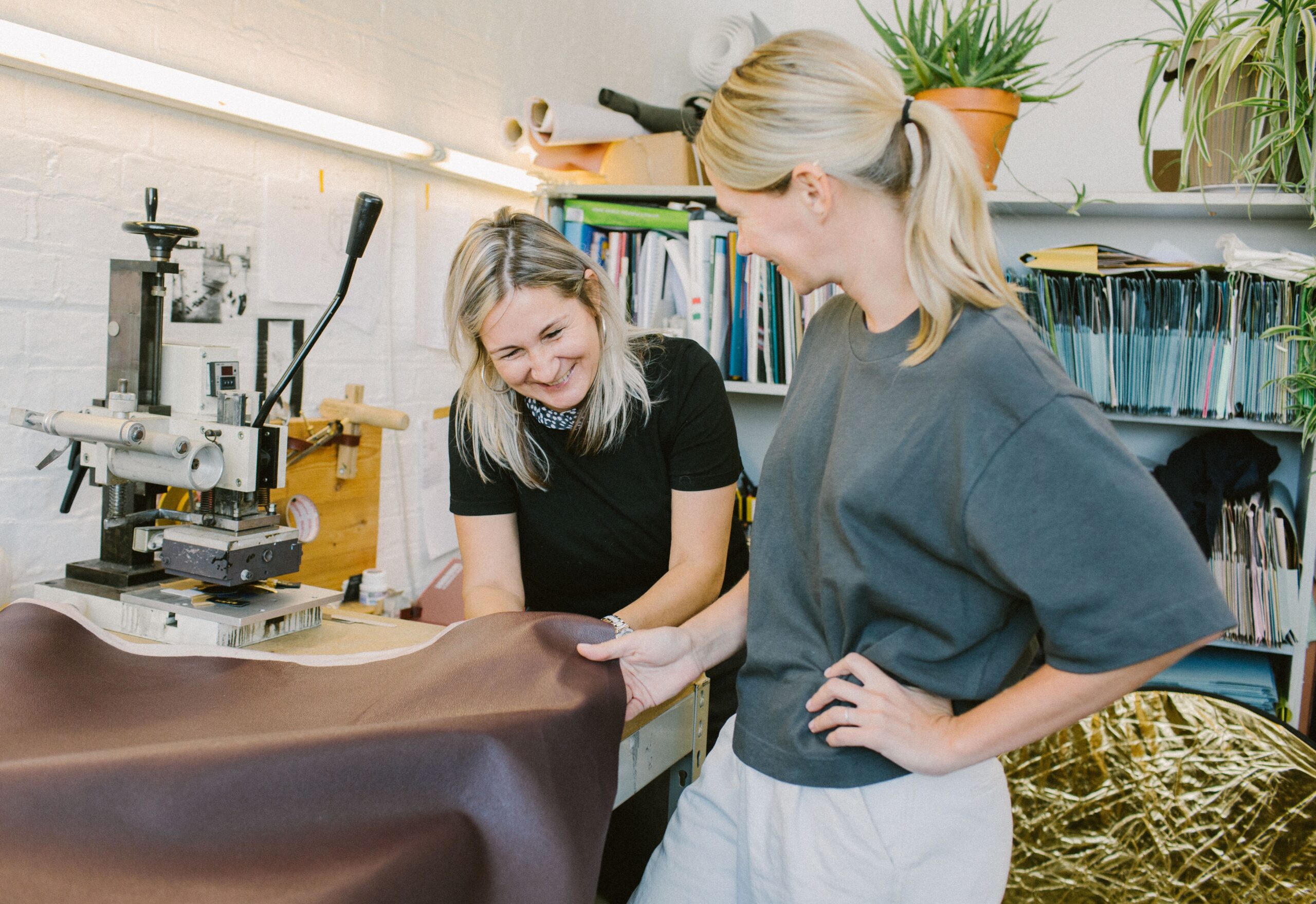
Fabric selection with a colleague
EH: How would you describe your personality?
GM: It’s a very cheesy thing to say but generally, I love people and like spending time with people. But I still do take quite a bit of ‘me time’ and ‘focus time’. Because to get anything done, you can’t be jumping from call to call. Sometimes I will block out four hours to get something big done.
EH: How do you wind down and relax?
GM: Yoga, a glass of wine and a hot bath.
EH: What is the most important lesson you’ve learned through setting up your own business?
GM: The learning curve never stops and it’s always steep. I made a mistake of starting a business in an industry I didn’t have any experience in. So I was going back to the very beginning and having to restart my career for the third time.
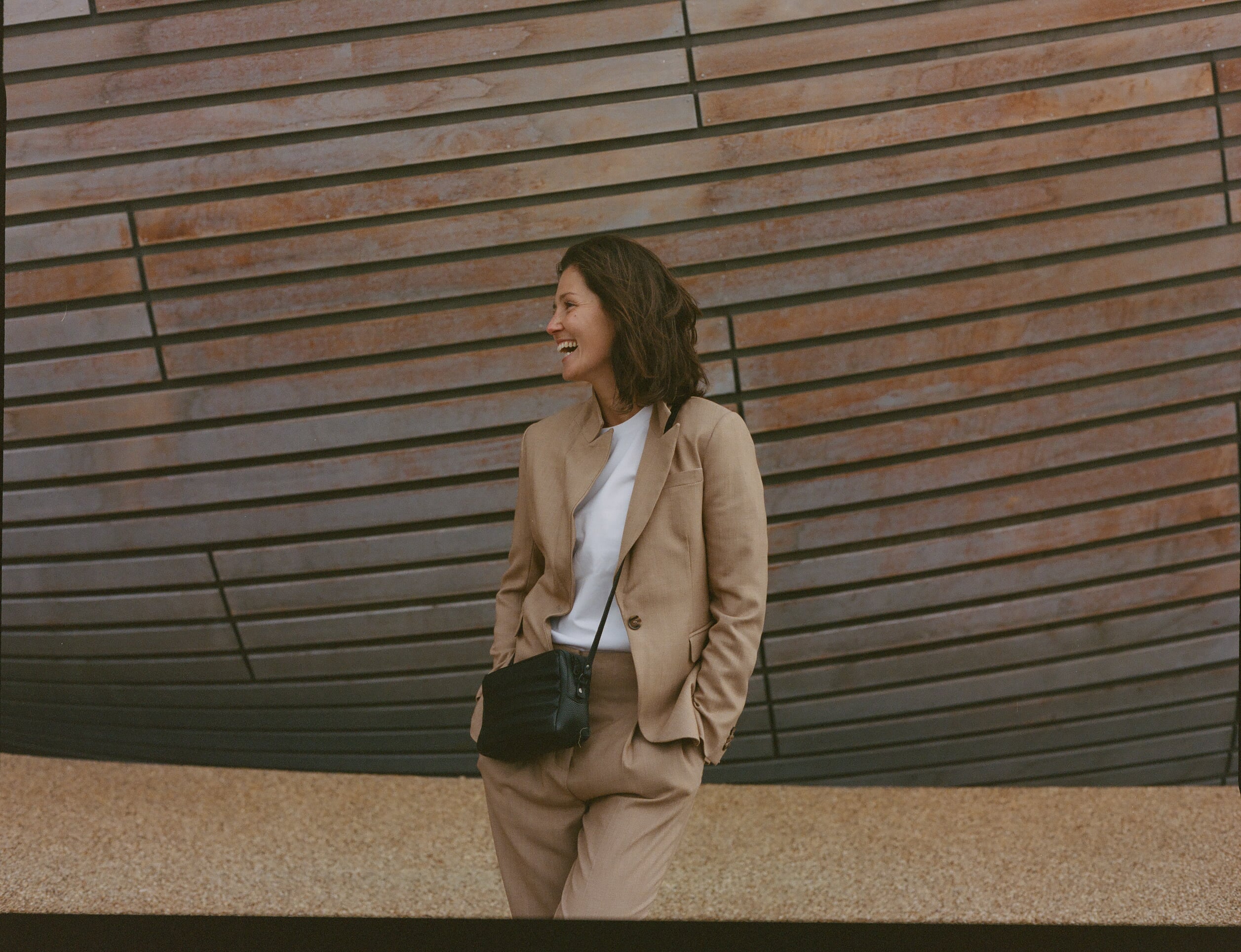
Pictured: a lifestyle campaign shot featuring the Ridley crossbody bag
EH: Who in your life inspires you?
GM: The people that are inspiring me constantly are people that are taking trash and turning it into treasure – that is my geeky passion. At the moment, I’m working with the founder of Biophilica, who has just developed a material made from agricultural waste that behaves exactly like leather but is compostable. It’s going to be a complete revolution. I have so much respect for Biophilica’s founder Mira Nameth, who is a mother as well and is juggling lots of amazing things. She’s also a career-changer. It’s finding little bits of inspiration from various experiences, from different people, and it’s not always about achievements.
EH: What can’t go a day without doing?
GM: I definitely need a cuddle with the kids and my husband. That is the most grounding and beautiful thing that happens to me every day.