
Brand to know
Ssōne uses rare textiles and traditional techniques that are underpinned by responsible sourcing and manufacturing processes, and inspiration for the brand comes from romance and utility. Each item, carefully made out of organic, natural or recycled material, is designed for a wardrobe that will serve daily and enchant season after season.
Ssōne
Founder Caroline Smithson has been designing beautiful, thoughtfully crafted clothing at Ssōne (pronounced ‘sewn’) for over four years now. “I’ve always had a very feminine leaning,” Caroline tells me over the phone, her voice confident and self-assured. “I’ve always followed a very ethereal direction with Ssōne. There’s an outdoorsy, very natural energy around it.”
Second wave feminism inspires her latest collection. “I was really keen to go into militaria and utility ware while keeping in mind that it was a feminist movement. [I wanted to highlight how] underneath these very tough exterior shells were very feminine women trying to get their voices heard,” she says.
41-year-old Caroline, originally from Berwick-upon-Tweed in rural Northumberland, started learning pattern cutting at the age of sixteen. After a BA in Fashion at Kingston University, and a stint working in luxury denim, Caroline enrolled on a master’s degree course in Fashion at Central Saint Martins. Here, she studied under the tutelage of Louise Wilson. (“It was incredibly tough and very, very competitive – I barely slept for a year and a half – but very, very, fun,” she said of the experience.) At the time, razor-sharp minimalism was popular amongst her peers, but Caroline was more interested in designing whimsical, ethereal clothes with details such as botanical-dyed trimmings and lace.
She became disillusioned by “truckloads” of discarded clothing during her brand director role at a large fashion company after graduation. This feeling of unease, coupled with a petition for greener spaces for the children at her daughter’s school, gave Smithson the impetus she needed to launch her own brand in 2017.
Here, Caroline talks us through three of her favourite pieces:
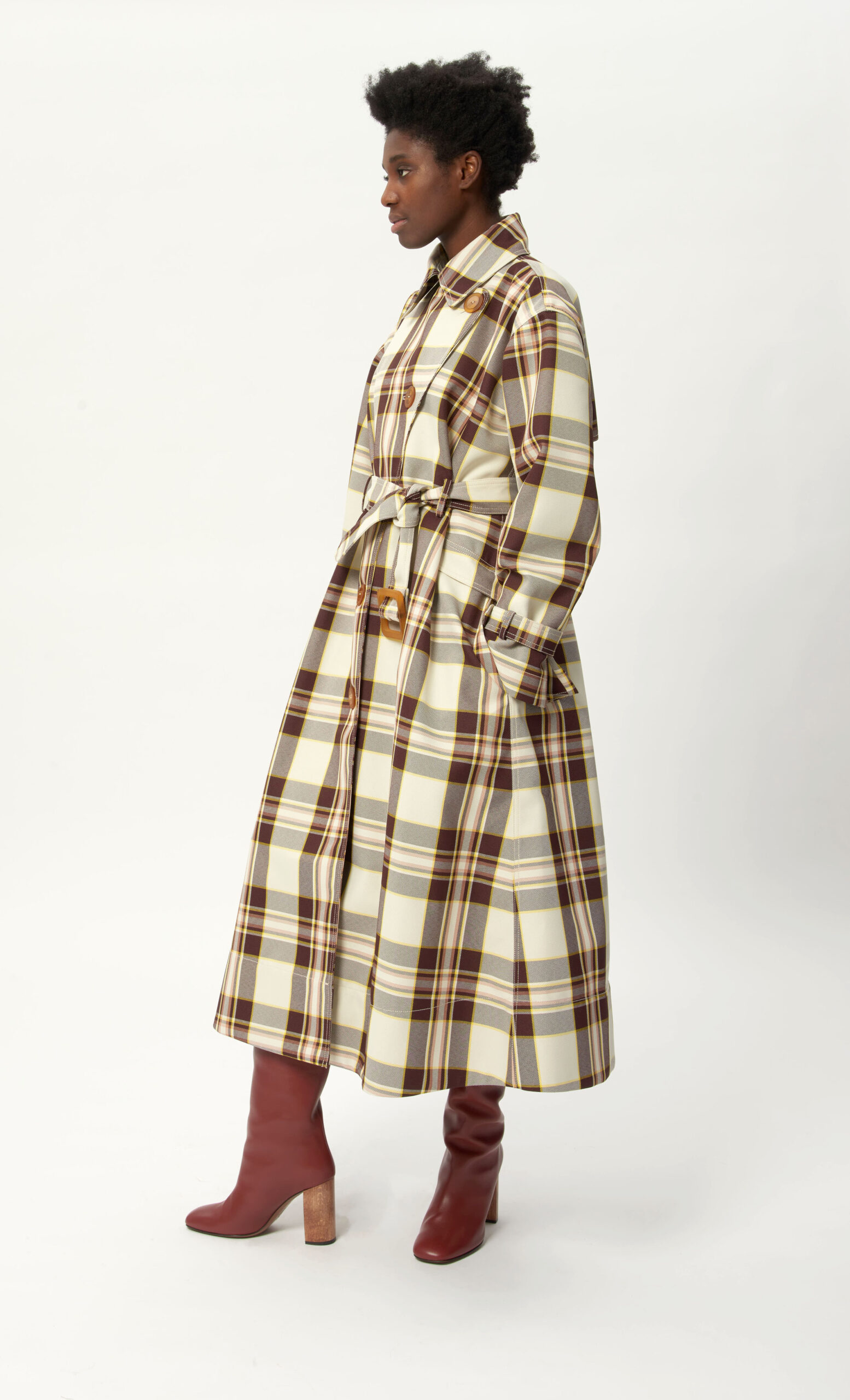
Quartz Coat
“This coat is made of post-consumer plastic waste. It’s woven in Italy, and it’s a check we designed ourselves, so you can’t find it anywhere else. The style of the coat is based on a men’s military raincoat. When designing this coat, I was very interested in women wearing them and being on the front line [during the war].
“In terms of how I would style this coat, I think this would look really nice over a simple white dress or over jeans and a denim shirt. This is a good transitional coat, so it would look really nice over a big chunky roll neck as well – it’s very versatile. It could be worn out for lunch or dinner but it could also be worn to the park with jeans and flats.”
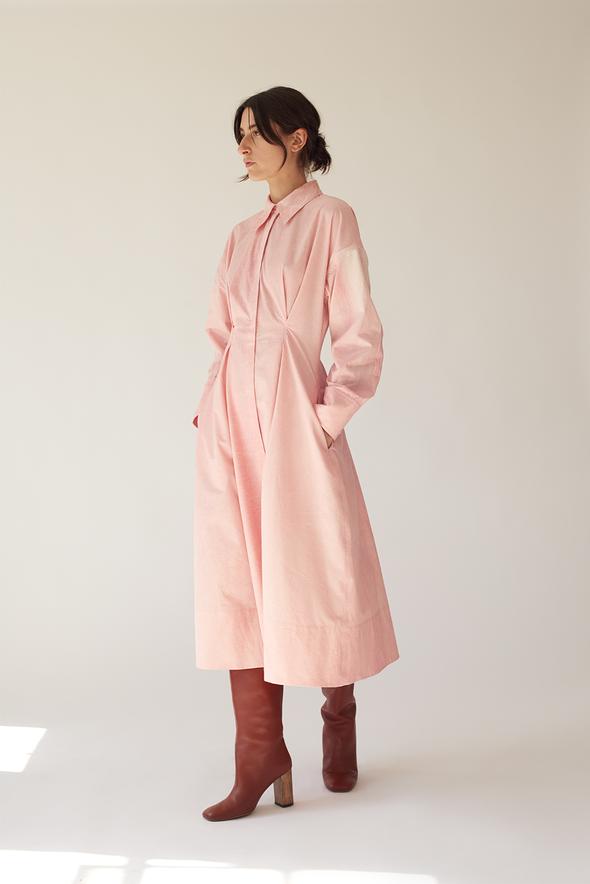
Blance Dress
“This dress is made out of naturally dyed organic cotton. It’s part of our re-Ssōne zero waste programme: we take back stock from our shop that hasn’t sold in the season, then we recycle it into a second season. We’re very keen to prolong the lifecycle of an item of clothing. This dress was from season one. We then brought it back and embroidered over the top of it with motifs that felt relevant to us at the time. We have also got the bird, which is our logo. We had them embroidered by a not-for-profit women’s group that is training up women that have come to the UK. Perhaps English isn’t their first language or they haven’t got any qualifications, but we train them up to go into the garment and textile industry.
“In terms of styling, I wear mine with a roll neck underneath and a knee-high boot. Otherwise, you can roll up the sleeves, unbutton it a bit and wear it with a sandal. This is a bit more of a city dress to me; I wear it quite a lot for meetings, as it’s a bit smarter. It’s quite a feminine silhouette because it has a small waist and large skirt. But it’s also quite tough at the same time, in that it has a masculine shirt collar and masculine sleeve. It’s a great piece that we go back to each season. It always does really well.”
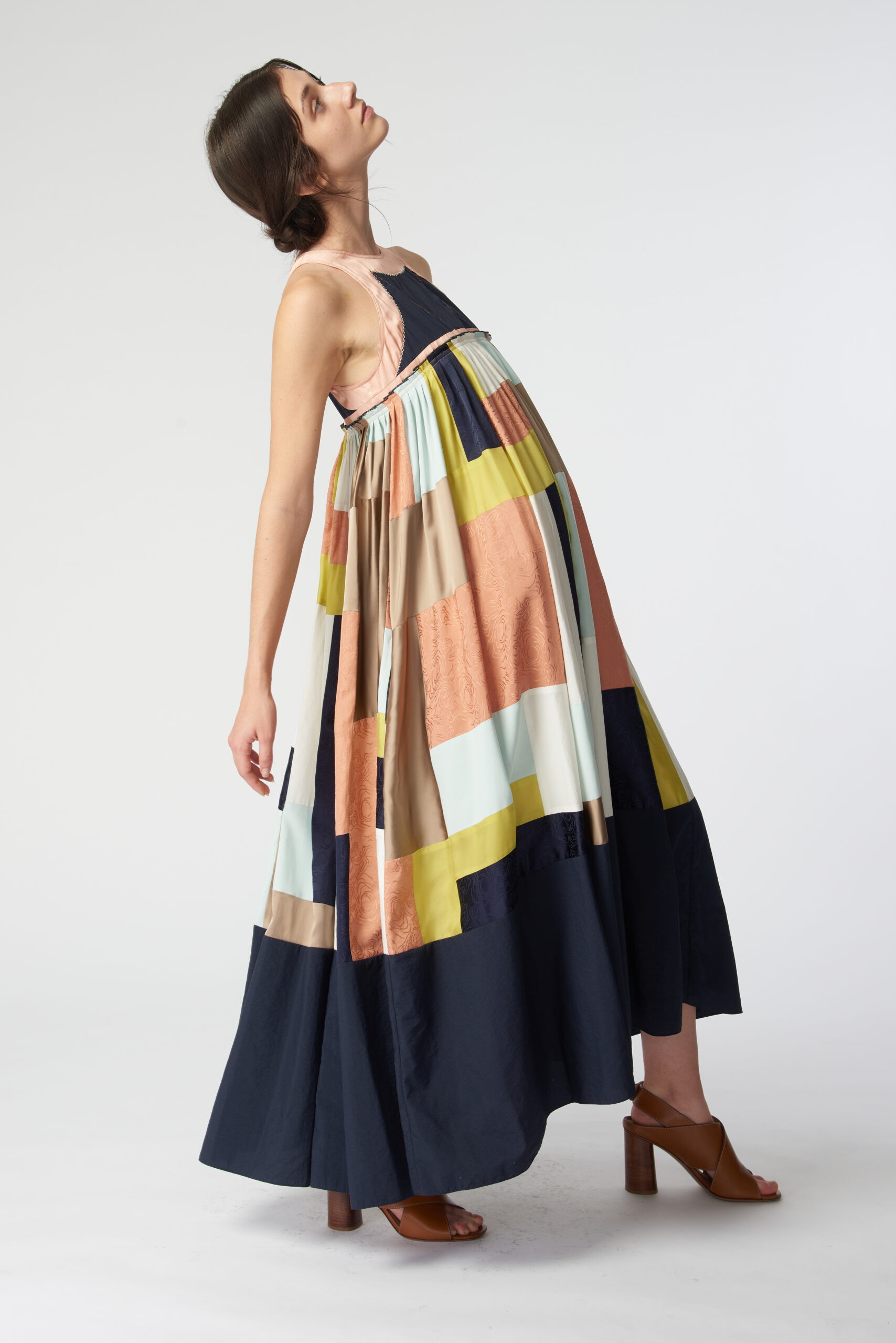
Lottie Dress
“A really good example of how we reuse fabrics from previous collections, this is a patchwork dress from the season before, and it’s made in India by patchwork artisans. The bib at the front of the dress is embroidered by the same team.
“I think this has been really successful [with our customers] because it has a lot of textural interest. For example, within each patch, there’s jacquards and other patterns – there’s lots to look at. You can feel the craftsmanship and you can feel that hands have touched it – it’s not a T-shirt from a factory floor. There’s a massive element of bespoke to it.
“In terms of styling, this is a nice lunch dress. I’d wear it with some simple bracelets, sandals and a basket bag.”